Mastering the Synergy: 9 Essential Human-AI Collaboration Skills for the Future Workforce

Introduction
The landscape of the global workforce is undergoing a seismic shift, driven by the rapid integration of Artificial Intelligence (AI) into daily operations. We have moved beyond the era where AI was viewed merely as a tool for automation; today, it is becoming a sophisticated collaborator. This transition from ‘Human-versus-Machine’ to ‘Human-with-Machine’ requires a fundamental re-evaluation of professional competencies. To remain competitive and effective, the modern workforce must develop a specialized set of skills designed to harmonize human intuition with algorithmic power. This article explores the nine critical skills necessary for successful human-AI collaboration in the professional sphere.
1. Advanced Prompt Engineering and AI Communication
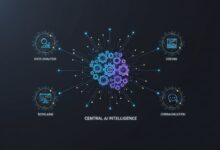





The ability to effectively communicate with AI models is the cornerstone of modern productivity. Prompt engineering has evolved from a niche technical trick into a vital communication skill. It involves the precise articulation of tasks, the provision of relevant context, and the iterative refinement of queries to extract the most accurate and useful outputs from Large Language Models (LLMs). Professionals who master this skill can significantly reduce ‘hallucinations’ and ensure that AI-generated content aligns with organizational standards.
2. Data Literacy and Analytical Interpretation
AI thrives on data, but data without context is often misleading. The collaborative workforce must possess high levels of data literacy—not necessarily to write code, but to understand the provenance, quality, and implications of the data being processed. Human collaborators must be able to interpret AI-generated analytics, identifying trends that require human intervention and questioning anomalies that the algorithm might overlook.
[IMAGE_PROMPT: A professional analyst sitting at a desk with two monitors showing complex data charts and an AI interface, looking thoughtfully at the screen while holding a tablet showing a conceptual connection between human brains and digital circuits.]
3. Ethical Judgment and Bias Mitigation
Algorithms are not inherently objective; they mirror the biases present in their training data. One of the most critical roles for humans in the AI era is serving as an ethical compass. Workers must be trained to recognize algorithmic bias and evaluate AI outputs through a lens of fairness, inclusivity, and legal compliance. Ensuring that AI recommendations do not violate ethical standards is a uniquely human responsibility that requires deep contextual awareness.
4. Critical Thinking and Problem Framing
While AI is exceptionally good at solving defined problems, humans excel at defining what those problems are. Problem framing involves identifying the right questions to ask and determining which challenges are best suited for AI intervention. Critical thinking allows professionals to validate AI-generated solutions, ensuring they are not just logically sound but also practically viable within the nuances of the real-world business environment.
5. Emotional Intelligence (EQ) and Human-Centric Communication
As AI takes over more cognitive and analytical tasks, the value of ‘soft skills’ increases exponentially. Empathy, negotiation, conflict resolution, and leadership remain exclusively human domains. In a collaborative setting, professionals must use AI to handle data-heavy tasks so they can focus on building relationships, managing team dynamics, and providing the empathetic touch that clients and colleagues require. AI can suggest a response, but it cannot feel the weight of a situation.
[IMAGE_PROMPT: A diverse business meeting where a human leader is explaining a strategy to a group of attentive colleagues, with a transparent digital overlay showing AI-driven market projections in the background.]
6. Systems Thinking and Workflow Integration
Collaboration with AI is not an isolated event; it is part of a larger ecosystem. Professionals need systems thinking to understand how AI tools integrate into existing workflows. This includes knowing when to hand off a task to an AI, how to monitor the hand-off process, and how to reintegrate the AI’s output back into the human-led project. Optimizing this ‘handshake’ between human and machine is vital for operational efficiency.
7. Adaptability and Continuous Learning Agility
The pace of AI development is unprecedented. A skill learned today may be obsolete in six months as new models and features emerge. Therefore, the workforce must cultivate a growth mindset and a high ‘Adaptability Quotient’ (AQ). Successful collaborators are those who are not afraid to unlearn old methods and experiment with new AI capabilities, maintaining a lifelong commitment to technical and conceptual upskilling.
8. AI-Augmented Creativity and Innovation
AI should be viewed as a ‘sparring partner’ for creativity rather than a replacement for it. In fields like design, marketing, and engineering, the most innovative outcomes occur when humans use AI to generate a vast array of initial concepts, which the human then curates, refines, and imbues with soul and purpose. Mastering the art of ‘Co-creation’ allows for a level of creative output that neither a human nor an AI could achieve independently.
[IMAGE_PROMPT: A close-up shot of a designer’s hands using a stylus on a digital tablet to refine a 3D architectural model that was initially generated by AI, with a soft ambient blue light illuminating the workspace.]
9. Technical Troubleshooting and Risk Management
Every professional using AI must act as a first-line quality assurance officer. This involves understanding the limitations and potential failure points of the AI systems they utilize. From identifying security risks (such as data leaks) to recognizing when an AI model is ‘drifting’ from its intended purpose, human oversight is the final safeguard. Risk management in the AI era means being proactive in auditing machine outputs for accuracy and reliability.
Conclusion
The future of work is not a zero-sum game between humans and artificial intelligence. Instead, it is a symbiotic relationship where the strengths of both are maximized. By developing these nine essential skills, the workforce can transition from being passive users of technology to being active, strategic collaborators. Organizations that invest in cultivating these competencies will find themselves at the forefront of the AI revolution, driving innovation while maintaining the human-centric values that define successful enterprises.